

What is the production process of non - woven fabric blankets?
Nov 19, 2025
Leave a message
Hey there! As a supplier of Non-woven Fabric Blankets, I'm super stoked to take you through the production process of these amazing blankets. Non-woven fabric blankets are widely used in various scenarios, from emergency situations to everyday comfort. So, let's dive right in!
Raw Material Selection
The first step in making non-woven fabric blankets is choosing the right raw materials. We usually use synthetic fibers like polypropylene, polyester, or a blend of both. These fibers are great because they're durable, lightweight, and can be easily processed. Polypropylene, for example, is known for its high strength and resistance to moisture, while polyester offers excellent elasticity and colorfastness.
We source our fibers from reliable suppliers who meet our strict quality standards. Before using them, we conduct thorough tests to ensure they're free from any impurities or defects. This way, we can guarantee that our blankets are of the highest quality.
Fiber Opening and Mixing
Once we have the raw fibers, the next step is to open them up and mix them together. This is done using specialized machines called fiber openers. These machines break up the clumps of fibers and separate them into individual strands.
After opening, the fibers are then mixed in the right proportions. This is important because it determines the properties of the final blanket, such as its softness, strength, and thickness. We use computer-controlled systems to ensure accurate mixing, so every batch of blankets is consistent in quality.
Web Formation
The mixed fibers are then formed into a web, which is a thin layer of fibers laid out evenly. There are several methods for web formation, but the most common one is the carding process. In carding, the fibers are passed through a series of rotating cylinders with fine teeth. These teeth comb the fibers and align them in a parallel direction, creating a continuous web.
Another method is the air-laying process, which uses air currents to distribute the fibers randomly. This results in a more uniform and isotropic web, which is suitable for blankets that require high strength and durability.
Bonding
Once the web is formed, it needs to be bonded together to give it strength and stability. There are three main bonding methods: thermal bonding, chemical bonding, and mechanical bonding.
- Thermal Bonding: This is the most widely used method for non-woven fabric blankets. In thermal bonding, the web is passed through a heated oven or between heated rollers. The heat melts the fibers' surface, causing them to stick together. This creates a strong and durable bond without the need for any additional chemicals.
- Chemical Bonding: In chemical bonding, a bonding agent, such as a resin or adhesive, is applied to the web. The bonding agent is then cured using heat or radiation, which causes it to harden and hold the fibers together. Chemical bonding is often used for blankets that require high strength and water resistance.
- Mechanical Bonding: Mechanical bonding involves physically entangling the fibers together. This can be done using methods such as needle punching or hydroentanglement. Needle punching uses barbed needles to penetrate the web and entangle the fibers, while hydroentanglement uses high-pressure water jets to interlock the fibers.
Finishing
After bonding, the non-woven fabric is ready for finishing. This involves a series of processes to improve the blanket's appearance, feel, and performance.
- Calendering: Calendering is a process where the fabric is passed through a series of heated rollers under high pressure. This smooths the surface of the fabric, improves its luster, and reduces its thickness. Calendering also helps to enhance the blanket's softness and drape.
- Printing and Coating: Printing and coating can be applied to the non-woven fabric to add color, patterns, or special properties. For example, a waterproof coating can be applied to make the blanket suitable for outdoor use, or a flame-retardant coating can be added for safety reasons.
- Cutting and Sewing: Finally, the non-woven fabric is cut into the desired size and shape, and then sewn together to form the blanket. This can be done using traditional sewing machines or specialized cutting and sewing equipment.
Quality Control
Throughout the production process, we have strict quality control measures in place to ensure that every non-woven fabric blanket meets our high standards. We conduct regular inspections at each stage of production, from raw material selection to final finishing.
We also perform a variety of tests on the finished blankets, such as strength testing, thickness testing, and colorfastness testing. Only after passing all these tests are the blankets approved for sale.
Applications of Non-woven Fabric Blankets
Non-woven fabric blankets have a wide range of applications, thanks to their unique properties. Here are some of the most common uses:
- Emergency Situations: Non-woven fabric blankets are often used in emergency situations, such as natural disasters or outdoor emergencies. They're lightweight, portable, and can provide insulation and protection from the elements. Check out our Mylar Emergency Blanket for more information on emergency blankets.
- Medical and Healthcare: Non-woven fabric blankets are also used in the medical and healthcare industry. They're hypoallergenic, breathable, and easy to clean, making them suitable for use in hospitals, clinics, and nursing homes.
- Transportation: Non-woven fabric blankets are used in the transportation industry to protect goods during transit. They can prevent damage from scratches, dirt, and moisture. Check out our Transport Blanket for more details.
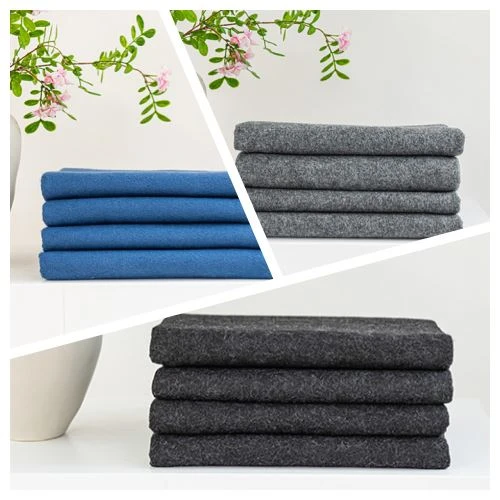
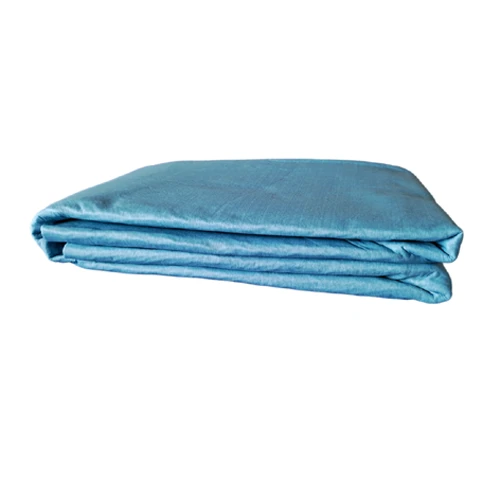
- Home and Bedding: Non-woven fabric blankets are becoming increasingly popular for home use. They're soft, comfortable, and come in a variety of colors and patterns. You can find our Non-woven Fabric Blanket on our website.
Conclusion
So, there you have it! That's the production process of non-woven fabric blankets in a nutshell. As a supplier, we're committed to producing high-quality non-woven fabric blankets that meet the needs of our customers.
If you're interested in purchasing non-woven fabric blankets for your business or personal use, we'd love to hear from you. Just get in touch with us, and we'll be happy to discuss your requirements and provide you with a quote.
Thanks for reading!
References
- "Nonwoven Fabrics: Structure, Properties, and Applications" by J. F. Young
- "The Handbook of Nonwovens" edited by S. Russell