

What is the absorbency of a wool blanket?
Dec 02, 2025
Leave a message
What is the absorbency of a wool blanket?
As a wool blanket supplier, I often get asked about the various properties of our products, and one question that comes up quite frequently is about the absorbency of wool blankets. In this blog post, I'll delve into the science behind wool's absorbency, how it affects the performance of our blankets, and why it matters to you as a consumer.
The Science of Wool Absorbency
Wool is a remarkable natural fiber with unique properties that set it apart from other materials. One of these properties is its high absorbency. Wool fibers have a complex structure that allows them to absorb and hold a significant amount of moisture. Each wool fiber is made up of a protein called keratin, which has a three - dimensional structure with many tiny pores and spaces. These pores can trap water molecules, allowing the wool to absorb up to 30% of its own weight in moisture without feeling wet to the touch.
This is due to the hygroscopic nature of wool. Hygroscopy is the ability of a material to attract and hold water molecules from the surrounding environment. When the air around the wool is humid, the wool fibers will absorb moisture from the air. Conversely, when the air is dry, the wool will release the moisture back into the environment. This natural moisture - regulating ability makes wool an ideal material for blankets.
How Absorbency Affects Wool Blankets
Comfort
The absorbency of wool blankets plays a crucial role in providing comfort. When you sleep under a wool blanket, your body naturally emits moisture through sweating. A wool blanket can absorb this moisture, keeping you dry and comfortable throughout the night. Unlike synthetic materials that can make you feel sticky and clammy when they absorb sweat, wool remains dry to the touch even when it has absorbed a large amount of moisture. This is because the moisture is held within the fiber structure rather than on the surface of the blanket.
Temperature Regulation
Wool's absorbency also contributes to its excellent temperature - regulating properties. When the wool absorbs moisture from your body, it undergoes a process called evaporation. Evaporation is a cooling process, which means that as the moisture evaporates from the wool fibers, it helps to cool your body down. On the other hand, in colder conditions, the moisture held within the wool fibers can act as an insulator. The water molecules in the wool slow down the transfer of heat, keeping you warm.
Health Benefits
The ability of wool blankets to absorb moisture can also have health benefits. By keeping you dry, wool blankets can help prevent the growth of mold, mildew, and dust mites, which are common allergens. Additionally, the natural antibacterial and antifungal properties of wool are enhanced by its absorbency. Since the wool remains dry on the surface, it creates an environment that is less conducive to the growth of bacteria and fungi.
Different Types of Wool Blankets and Their Absorbency
We offer a range of wool blankets, including Plain Wool Blanket and Jacquard Wool Blanket. While the basic absorbency properties of wool apply to all our blankets, there can be some slight differences based on the type of wool used and the construction of the blanket.
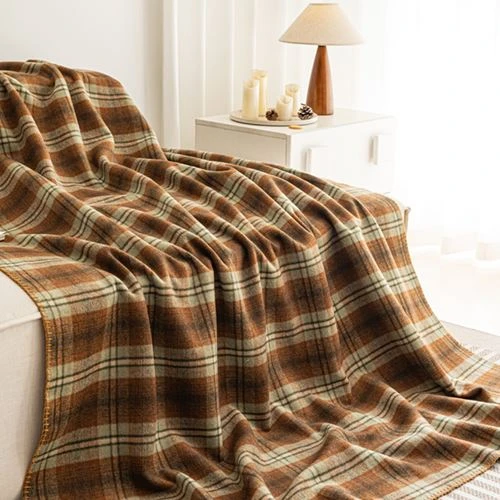

Plain wool blankets are made from simple, unpatterned wool fabric. They are often made from high - quality wool fibers that have excellent absorbency. The plain weave allows for good air circulation, which can enhance the evaporation process and improve the overall moisture - wicking ability of the blanket.
Jacquard wool blankets, on the other hand, have a more intricate pattern woven into the fabric. The weaving process of jacquard blankets can sometimes result in a slightly denser fabric. While this doesn't significantly reduce the absorbency of the wool, it may affect the rate at which the moisture is absorbed and released. However, the overall absorbency of jacquard wool blankets is still very high, and they offer the same comfort and temperature - regulating benefits as plain wool blankets.
Factors Affecting Wool Blanket Absorbency
Wool Quality
The quality of the wool used in the blanket is a major factor in determining its absorbency. Higher - quality wool fibers, such as those from Merino sheep, have a finer diameter and a more uniform structure. This allows them to absorb and hold more moisture compared to lower - quality wool fibers.
Blanket Thickness
Thicker wool blankets generally have a higher absorbency capacity. This is because they contain more wool fibers, which means there are more pores and spaces available to hold moisture. However, it's important to note that a thicker blanket may not always be the best choice, as it can also be heavier and less breathable.
Environmental Conditions
The absorbency of a wool blanket can also be affected by the environmental conditions. In a humid environment, the wool will absorb more moisture from the air, while in a dry environment, it will release the moisture it has absorbed. The temperature of the environment can also play a role. Warmer temperatures can increase the rate of evaporation, which means the wool will release moisture more quickly.
Caring for Wool Blankets to Maintain Absorbency
To ensure that your wool blanket maintains its absorbency over time, proper care is essential. Here are some tips:
- Regular Cleaning: It's important to clean your wool blanket regularly to remove dirt, oils, and other contaminants that can clog the pores of the wool fibers and reduce absorbency. However, be careful not to over - clean the blanket, as excessive washing can damage the wool fibers.
- Use Mild Detergents: When cleaning your wool blanket, use a mild, wool - specific detergent. Harsh detergents can strip the natural oils from the wool fibers, which can affect their absorbency and durability.
- Air Drying: After washing, air dry your wool blanket flat. Avoid using a dryer, as the high heat can shrink and damage the wool fibers. Air drying allows the moisture to evaporate naturally, which helps to maintain the structure of the wool fibers.
Why Choose Our Wool Blankets for Their Absorbency
As a wool blanket supplier, we take pride in offering high - quality wool blankets with excellent absorbency. Our blankets are made from the finest wool fibers, carefully selected for their absorbency and other desirable properties. We use traditional weaving techniques to ensure that our blankets have a strong and durable structure while maintaining their moisture - wicking ability.
Whether you're looking for a plain wool blanket for its simplicity and breathability or a jacquard wool blanket for its beautiful pattern, you can be confident that our products will provide you with the comfort, temperature regulation, and health benefits associated with high - absorbency wool blankets.
If you're interested in purchasing our wool blankets, we invite you to contact us for more information and to discuss your specific needs. Our team of experts is always ready to assist you in finding the perfect wool blanket for your home.
References
- "The Properties of Wool" - International Wool Textile Organization
- "Wool: A Natural Wonder" - Woolmark Company
- "Textile Science and Technology" - Various academic journals on textile materials