

Can transport blankets be used for infants?
Nov 03, 2025
Leave a message
Can transport blankets be used for infants? This is a question that many parents, caregivers, and medical professionals often ask. As a supplier of transport blankets, I am well - versed in the features and safety aspects of these products, and I'd like to delve into this topic in detail.
Understanding Transport Blankets
Transport blankets are designed to provide warmth and protection during the transportation of patients, whether it's from an accident scene to a hospital or between different medical facilities. They come in various types, each with its own set of characteristics.
One common type is the Mylar Emergency Blanket. Mylar blankets are made of a thin, reflective material. They work on the principle of reflecting the body's radiant heat back to the body, which helps in retaining warmth. These blankets are lightweight, compact, and can be easily carried in first - aid kits or emergency response vehicles.
Another type is the Non - woven Fabric Blanket. Non - woven fabric blankets are usually made from synthetic fibers. They offer good insulation and are often more durable than mylar blankets. They can absorb some moisture and are relatively soft to the touch.
And, of course, Transport Blanket itself encompasses a broader category that may combine different materials and features to meet the specific needs of patient transport.
Considerations for Using Transport Blankets with Infants
Safety
Safety is the top priority when it comes to using any product with infants. One of the main concerns is the risk of suffocation. Infants have a limited ability to move their heads and may accidentally cover their faces with the blanket, leading to a lack of oxygen. Therefore, if using a transport blanket for an infant, it should be used in a way that minimizes this risk. For example, it can be loosely draped over the infant's body, rather than tightly wrapped around the head and neck area.
The material of the transport blanket also matters. Some infants may have sensitive skin, and certain materials can cause allergic reactions. Mylar blankets, while effective at retaining heat, may feel cold and uncomfortable against an infant's delicate skin. Non - woven fabric blankets, on the other hand, are generally softer and may be a better choice in terms of skin contact.
Temperature Regulation
Infants have a less developed ability to regulate their body temperature compared to adults. Transport blankets are designed to keep patients warm, but it's important not to overheat an infant. Overheating can lead to a condition called hyperthermia, which can be dangerous for infants. When using a transport blanket, it's crucial to monitor the infant's body temperature regularly. If the infant starts to sweat or feels overly warm to the touch, the blanket may need to be adjusted or removed.
Mobility and Comfort
Infants need to be able to move their limbs freely for proper development. A transport blanket that is too heavy or restrictive can limit an infant's movement. This can be particularly important during long - distance transport, as restricted movement can cause discomfort and may even lead to muscle stiffness.
Benefits of Using Transport Blankets for Infants
Despite the considerations, there are also several benefits to using transport blankets for infants.
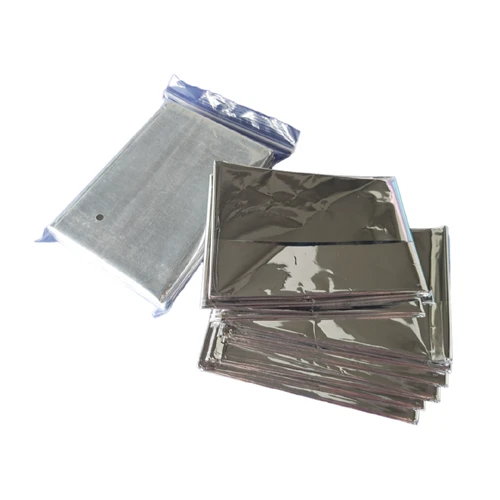

Protection during Transport
During the transportation of an infant, whether it's in an ambulance or a car, a transport blanket can provide an extra layer of protection. It can shield the infant from drafts, wind, and sudden temperature changes. For example, in cold weather, a transport blanket can help keep the infant warm and prevent hypothermia.
Hygiene
Transport blankets can act as a barrier between the infant and the surface they are lying on. This can be especially important in medical settings, where there may be a risk of exposure to germs and bacteria. A clean transport blanket can help reduce the risk of infection.
Best Practices for Using Transport Blankets with Infants
If you decide to use a transport blanket for an infant, here are some best practices to follow:
- Choose the Right Blanket: Based on the infant's skin sensitivity and the environmental conditions, select a suitable transport blanket. Non - woven fabric blankets are often a good choice for their softness and insulation properties.
- Proper Placement: Place the blanket loosely over the infant's body, making sure the face is clear. Avoid covering the head and neck area tightly.
- Monitor Temperature: Regularly check the infant's body temperature to ensure they are not overheating or getting too cold.
- Keep an Eye on Mobility: Make sure the blanket does not restrict the infant's movement. If the infant seems uncomfortable or is having difficulty moving, adjust the blanket accordingly.
Conclusion
In conclusion, transport blankets can be used for infants, but it's essential to do so with caution. By considering the safety, temperature regulation, and comfort of the infant, and following the best practices, transport blankets can provide valuable protection and warmth during transportation.
As a supplier of transport blankets, we are committed to providing high - quality products that meet the needs of both infants and medical professionals. Our transport blankets are designed with safety and functionality in mind, and we offer a variety of options to suit different requirements.
If you are interested in purchasing transport blankets for your medical facility, emergency response team, or other needs, we would be more than happy to discuss your requirements and provide you with the best solutions. Contact us to start a procurement negotiation and ensure that you get the right transport blankets for your specific situation.
References
- American Academy of Pediatrics. (2023). Safe Sleep for Babies.
- World Health Organization. (2022). Guidelines on Maternal and Newborn Health.
- Journal of Pediatric Nursing. (2021). Temperature Regulation in Infants during Transport.